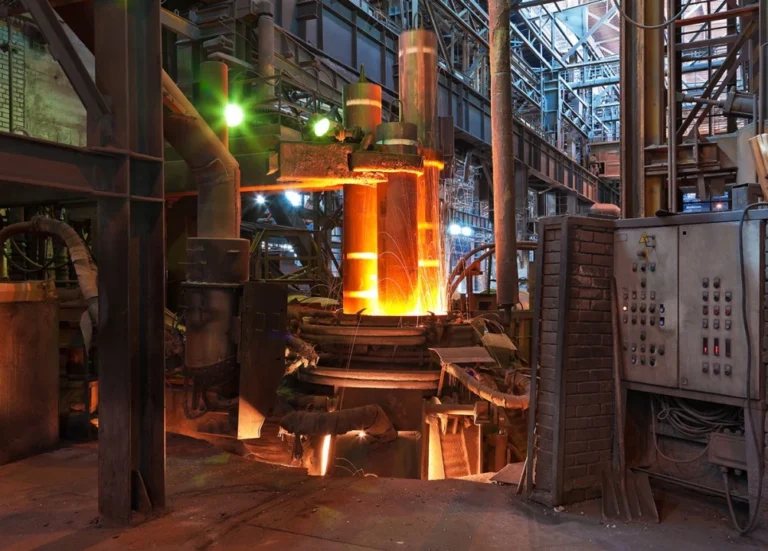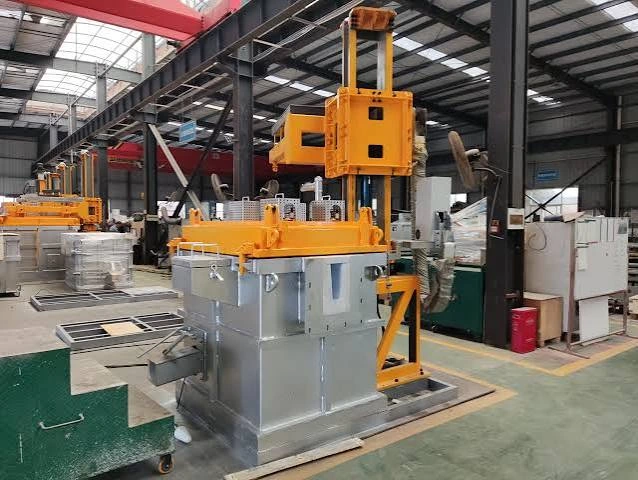
One of the most significant concerns with the melting of aluminum alloys is their purification. Melted aluminum has a strong tendency to absorb hydrogen and non-metallic inclusions from moisture in the air, such as alumina and magnesia oxides. This will result in internal porosity and shrinkage defects in the castings and will weaken their tensile strength.
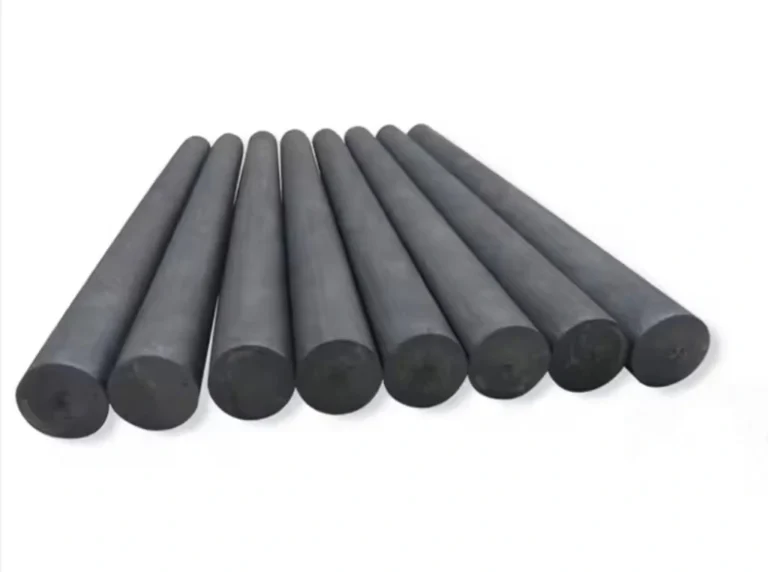
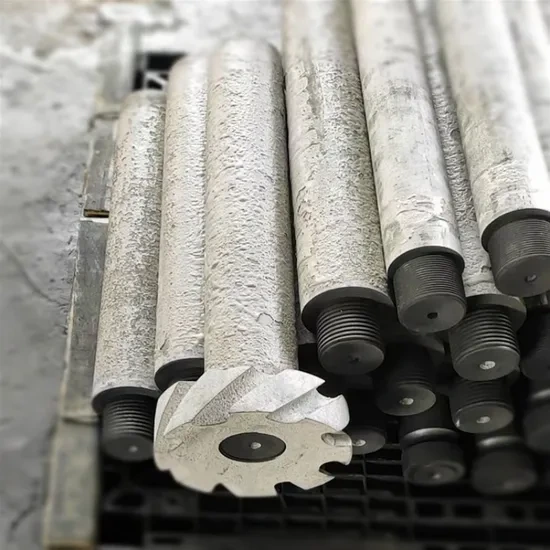
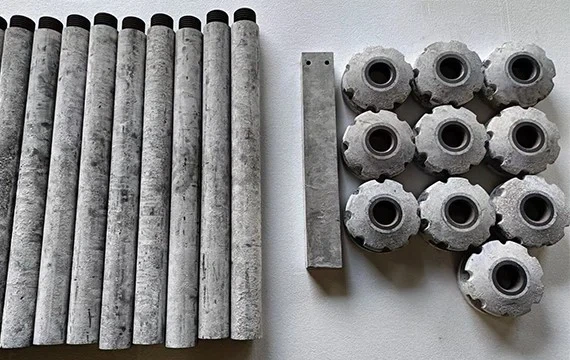
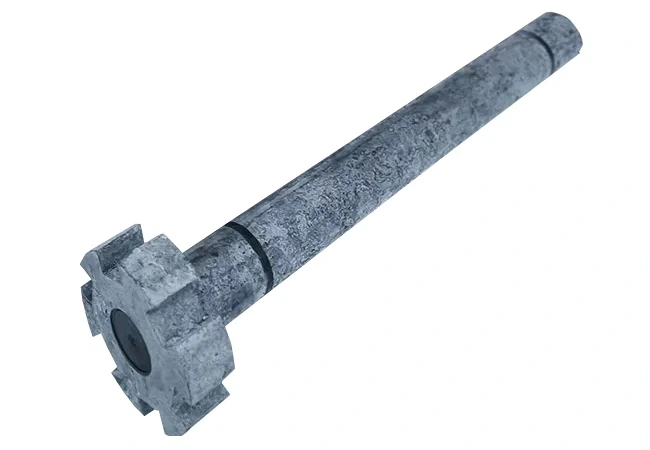
Among various melt processing techniques, rotary gas purging has established itself as the industry standard for hydrogen gas extraction and inclusion flotation. Positioned at the heart of this physical refining mechanism, the Antioxidant Graphite Rotor provides high thermal shock resistance, excellent structural rigidity, and superior anti-oxidation characteristics, making it the most reliable tool for aluminum melt treatment.
1. Working Principle of Antioxidant Graphite Rotors
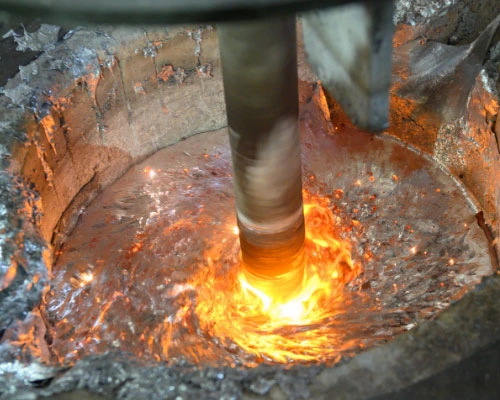
Rotary degassing operates through a combination of physical kinetics and thermodynamic equilibrium. High-purity inert gas—typically argon or nitrogen with a minimum purity of 99.995%—is introduced into the molten pool through the hollow drive shaft of the rotor assembly while the submerged head rotates at elevated speeds.
1.1 Bubble Dispersion and Mass Transfer Kinetics
In the process of rotation at working speeds of the Antioxidant Graphite Rotor from 300 rpm to 600 rpm, its specially designed rotor head transforms a steady gas flow into tiny micro-bubbles having diameters between 1 mm and 3 mm. The partial pressure of hydrogen dissolved in the molten aluminum (generally between 0.20 and 0.40 mL/100g Al) is higher than that inside new bubbles of inert gas; dissolved hydrogen atoms spontaneously diffuse through a phase interface to move to the bubbles.
1.2 Flotation Speed and Capture of Oxide Inclusions
As the bubbles travel to the top of the melt with a terminal velocity between 0.1 and 0.3 m/s owing to the presence of surface tension, the suspended solid particles tend to attach themselves to the bubbles and are lifted up, forming a dross film on the top of the liquid bath, resulting in the joint extraction of entrapped gases and solid inclusions. An appropriate Antioxidant Graphite Rotor generally lowers hydrogen content in molten aluminum to less than 0.10 mL/100g Al and enhances dross removal performance by more than 35%.
2. Key Advantages and Characteristics of Antioxidant Graphite Rotors
During operations within the bath containing molten aluminum at a temperature range of 700-800°C, the untreated synthetic graphite becomes susceptible to thermal oxidation at around 400°C in atmospheric oxygen. The process results in rapid necking of the shaft, eroding fluid channels within the rotor head, and mechanical breakage. The Antioxidant Graphite Rotor mitigates such problems by employing deep impregnation and sealing techniques.
2.1 Benchmarking Physical and Mechanical Properties
The following table highlights some differences between the standard untreated rotor and an improved Antioxidant Graphite Rotor with respect to their physical characteristics, mechanical properties, and service lives:
| Material Metric / Technical Parameter | Untreated Standard Graphite Rotor | Antioxidant Graphite Rotor |
| Bulk Density | 1.72 – 1.75 g/cm³ | ≥ 1.85 g/cm³ |
| Flexural Strength (Compressive) | 15 – 20 MPa | ≥ 35 MPa |
| Apparent Porosity | 12% – 15% | ≤ 8% |
| Threshold Oxidation Temperature | ~ 400°C | ≥ 750°C |
| Average Service Life | 10–15 days | 30–60 days (3–4× longer) |
2.2 Operational Benefits in Foundry Practices
Slow Degradation through Low Retarded Oxidation and Erosion Rates: The impregnation process ensures that liquids are introduced into the pores inside the structure of graphite, limiting the diffusion of oxygen and minimizing degradation.
Resistance to Thermal Shock and Dimensional Stability: Because of its extremely low thermal expansion coefficient, it is resistant to thermal shock cracks, enabling it to rotate concentrically up to 600 revolutions per minute.
Reduced Cost of Consumables: A service life that is extended to three to four times means that the cost of consumables is reduced to a great extent.
3. Application Range of Antioxidant Graphite Rotors
The ability to adapt the Antioxidant Graphite Rotor to different aluminum casting processes, furnace types, and manufacturing volumes makes the rotor applicable in diverse environments:
Continuous Casting Degassing Chambers
In aluminum continuous casting, as in the case of strip and slab casting processes, multiple Antioxidant Graphite Rotor pieces are installed in a multi-stage degassing chamber to process the high volume of liquid metal stream without interfering with the casting process output.
Degassing in Crucible/ Holding Furnaces
Degassing systems are applied in die casting factories by lowering rotors into stationary holding furnaces and ladles. The most common type of such rotor is the Haoxing Graphite Antioxidant Graphite Rotor. It is made of fine-grained, dense graphite impregnated with a special multi-stage antioxidizing process. The rotor is strong enough to resist high-velocity erosion at 750°C to provide a fine bubble shear formation suitable for aerospace and automotive casting. The Antioxidant Graphite Rotor has the following properties:
- Service life extended by 4-5 times;
- Increased oxidation resistance by 6-8 times;
- Improved flexural strength by about 50%;
- High resistance to aluminum corrosion.
Recycling/Re-melting of Scrap Aluminum
In scrap recycling, there are increased levels of oxides and salt fluxes. The use of an Antioxidant Graphite Rotor in the high-turbulence area will result in good flux distribution, fast hydrogen degassing, and slag coagulation before pouring.
4. Conclusion
The Antioxidant Graphite Rotor has shown itself to be the most effective method of aluminum degassing due to its structure, which allows it to resist the effects of high-temperature oxidation, has high mechanical strength, and has improved purification characteristics. The selection of high-quality graphite antioxidants will guarantee consistently low porosity, reduced scrap rate, and decreased material cost.
Are you in need of assistance with the design of your Antioxidant Graphite Rotor and its oxidation? Contact us now at Haoxing Graphite!