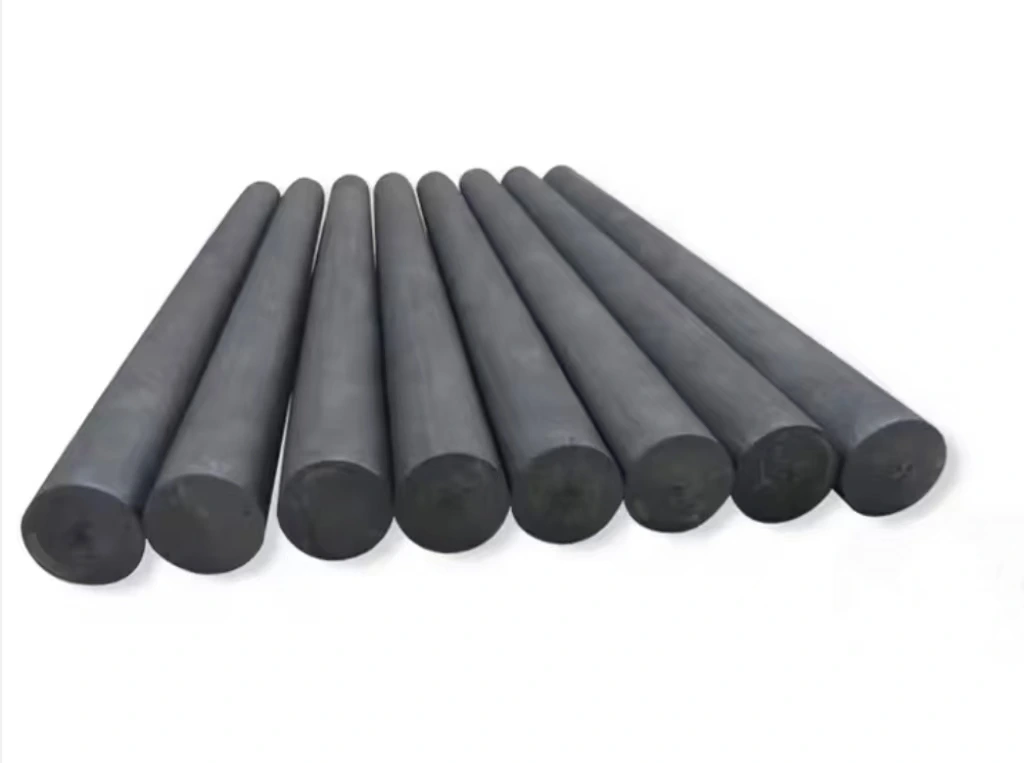
Graphite rods are extensively employed in industries where resistance to high temperatures, good electrical conductivity, thermal stability, and chemical resistance are required. The fact that graphite rods can endure harsh conditions and still be machinable makes them useful in diverse applications, including metalworking, EDM, and semiconductor processing.
The wide range of graphite rod uses stems from the material’s unique physical and chemical properties. High-quality graphite can withstand very high temperatures in a controlled atmosphere, with a sublimation point as high as 3,650°C. It is also an excellent conductor of electricity and heat, chemically inert, and has high resistance to friction.
Still, for different applications, various types of materials may be required. These include considerations of purity, density, grain size, electrical resistivity, thermal conductivity, and dimensions.
1. High-Temperature Furnace Applications
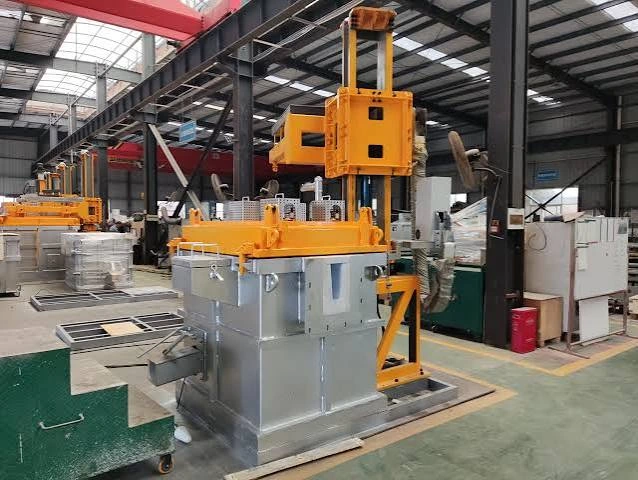
Graphite rod use in high-temperature furnaces is one of the most frequent applications. The rods can act as heaters, support structures, electrodes, and fixatives in either vacuum or inert gas furnaces.
The temperature in the furnaces may exceed 2,000°C depending on their type, while their excellent thermal conductivity helps distribute heat more evenly. This property is essential in thermal processes such as sintering, heat treatment, and crystal growth.
2. Metal Melting and Metallurgy
Graphite is significant in metal melting and metallurgy as it possesses both electrical conductivity and resistance to high temperatures.
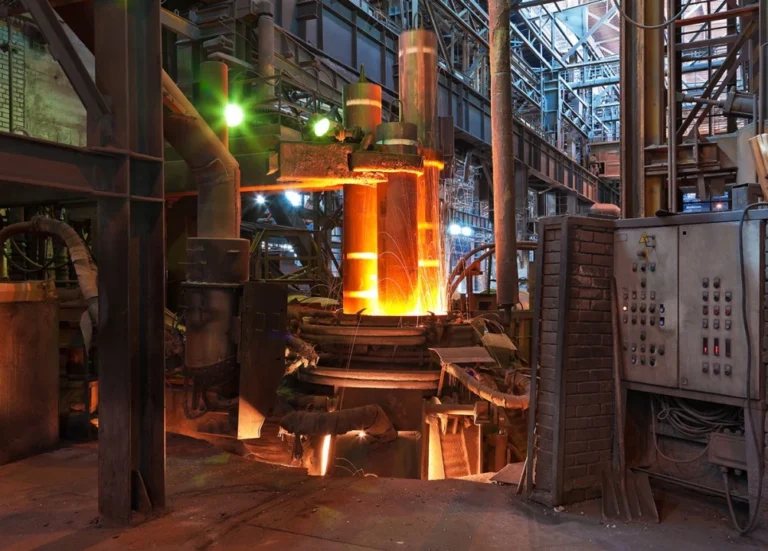
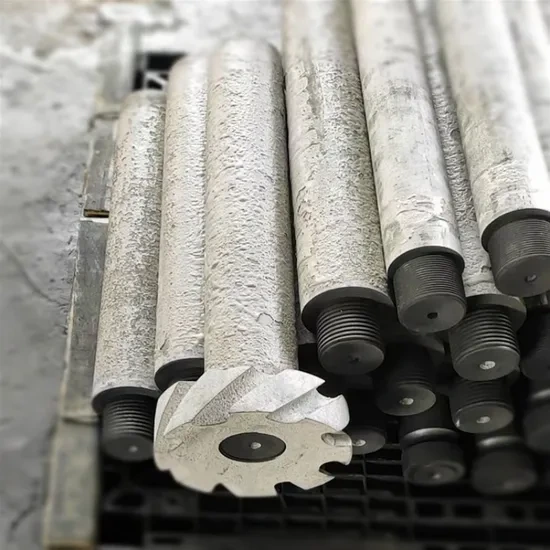
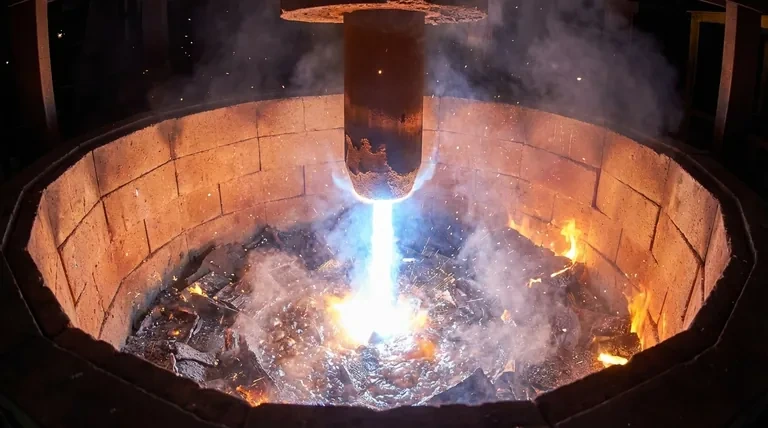
In electric arc furnaces, graphite electrodes conduct high electric currents to produce the necessary heat for melting metals. Graphite can also be employed in crucibles, molds, supports, and other components of high temperatures in the manufacture of aluminum, copper, and other non-ferrous metals.
Thermal shock resistance and stability are especially significant in the case of repeated heating and cooling.
3. Electrical Discharge Machining (EDM)
EDM is another important area among graphite rod uses. In this process, controlled electrical discharges remove material from a conductive workpiece.
Graphite is widely used for EDM electrodes because it combines excellent electrical conductivity with easy machining. High-quality graphite with fine grains is machined into intricate forms that are used in injection molds, die-casting molds, cavity dies, and industrial parts.
The correct grade of graphite is selected based on the shape of the electrode, finish, machining process, and volume of manufacture.
4. Semiconductor Manufacturing
For the semiconductor industry to work well, the materials have to be highly pure and highly thermally resistant. High-purity graphite can be used for the growth of crystals equipment, for heating, wafer processing equipment, and high-temperature fixings.
For some of the semiconductors, the level of impurities must be maintained at less than 100 ppm. Manufacturers must also evaluate the material’s density and its ability to maintain dimensional stability through repeated heating and cooling cycles.
5. Electrochemical Processes
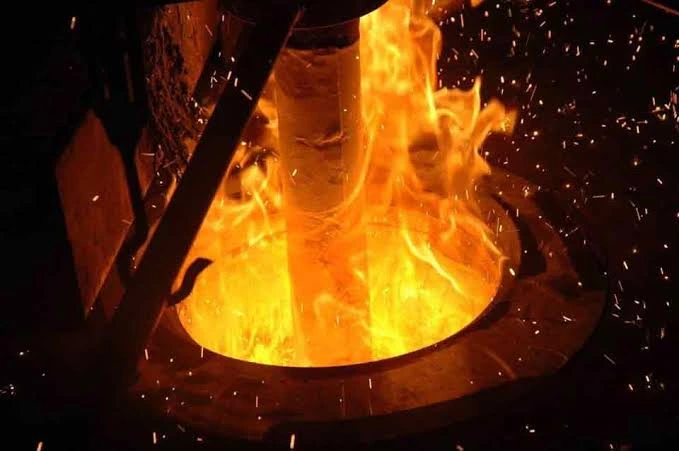
Graphite rods are frequently used as electrodes in electrochemical systems. Their electrical conductivity allows them to transfer current, while their chemical stability makes them suitable for many controlled laboratory and industrial environments.
Typical applications include:
- Electrolysis
- Battery research
- Fuel-cell development
- Electrochemical testing
- Materials research
The choice of graphite depends on factors such as electrolyte composition, temperature, current density, and exposure time.
6. Chemical Processing
Stability allows for the use of graphite rods in selected applications of chemical processing. Graphite will often be stable in various corrosive environments where some ordinary metals would need additional coatings to maintain stability.
Graphite can be used in certain electrolysis, reaction, heat transfer equipment, and corrosive media applications.
However, graphite can react with certain chemicals under specific conditions. The concentration, temperature, pressure, and time of exposure must be evaluated before making a choice of material.
7. Heating Elements and Thermal Processing
The graphite rod may act as a heating element in an electrical resistance heating system since when electricity flows through graphite, electrical energy is converted to heat.
This makes graphite ideal for use in thermal processing equipment working above 1,000°C, while some special equipment operates above 2,000°C.
Key advantages include:
- High-temperature capability
- Good electrical conductivity
- Efficient heat transfer
- Uniform heating
- Long service life under suitable conditions
The surrounding atmosphere is particularly important because graphite can oxidize at high temperatures when exposed to oxygen.
8. Laboratory and Research Equipment
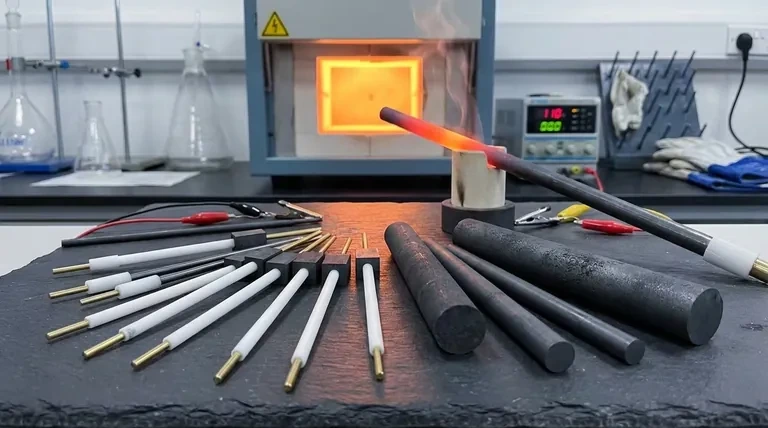
Laboratories also contribute to the range of graphite rod uses. Graphite rods can be machined to create electrodes, spacers, heaters, and any other component required for material science, chemistry, physics, or metallurgical experiments.
For instance, a lab might need to have a custom-made rod with a diameter of 10 mm and a certain length to match some kind of equipment. The ease of machining makes such custom-made items quite practical.
High-purity graphite is commonly used in order to avoid any possible contamination of the material used in the experiment.
9. Metal Casting and High-Temperature Tooling
Graphite can be machined into molds, supports, guides, and other tools used in high-temperature casting operations.
The molten metals can achieve temperatures that range in hundreds of degrees centigrade or more than 1,000°C. The thermal stability, minimal frictional properties, and thermal shock resistance of graphite make it an ideal material for some casting operations.
It is especially important in non-ferrous metal working, including aluminum and copper works.
10. Electrical and Energy Applications
Electrical and energy-related systems represent another category of graphite rod uses. Graphite rods are used as electrodes and conductive elements in various battery systems, electrochemical processes, and energy research projects.
Their electrical conductivity allows efficient current transfer, while their thermal stability is useful in systems exposed to both electrical and heat loads.
Depending on the application, manufacturers may need to evaluate electrical resistivity, purity, density, surface condition, and dimensional accuracy.
How to Choose the Right Graphite Rod?
Understanding graphite rod uses is only part of the selection process. The rod should match the actual operating environment and equipment requirements.
| Factor | Importance |
| Purity | Helps control contamination |
| Density | Affects strength and durability |
| Grain Size | Influences machining and surface finish |
| Electrical Resistivity | Important for electrodes and heating |
| Thermal Conductivity | Affects heat transfer |
| Operating Temperature | Determines suitable material grade |
| Chemical Environment | Influences compatibility and service life |
| Dimensions | Must match the equipment |
For example, an EDM electrode may prioritize fine grain size and machining precision, while a furnace heating element may require a different balance of electrical and thermal properties.
Conclusion
Whether in high-temperature furnaces, metalworking, EDM, semiconductor production, electrochemistry, or laboratory equipment, graphite rod uses cover a wide range of industrial applications.
Graphite rods have an appropriate type that needs to be selected based on various factors, including temperature, environment, purity, electrical requirements, chemicals, and mechanical properties. Graphite rods selected and machined appropriately will demonstrate consistent performance, effective heating, electrical properties, and durability.
If you have any questions regarding graphite rods’ specifications, sizes, materials, and applications, contact Haoxing Graphite, and we will find a suitable solution for your particular case.