


Hot top billet casting machine
The hot top billet casting machine is a state-of-the-art continuous and semi-continuous casting solution engineered for precision and efficiency. Being the top aluminum billet casting machine, it provides unprecedented control over the solidification process, which makes it the best choice for any foundry demanding excellence.
Key Features
Composite Crystallizer
At its core, this advanced equipment features a composite hot top crystallizer.
Integrated Heating System
It involves the use of a refractory hot top cavity that is capable of heating and retaining heat right above a water-cooled crystallizer.
Controlled Solidification Zone
This is a unique process that enables the molten metal to solidify below the water-cooled zone, thus avoiding any crusting at the surface of the liquid metal.
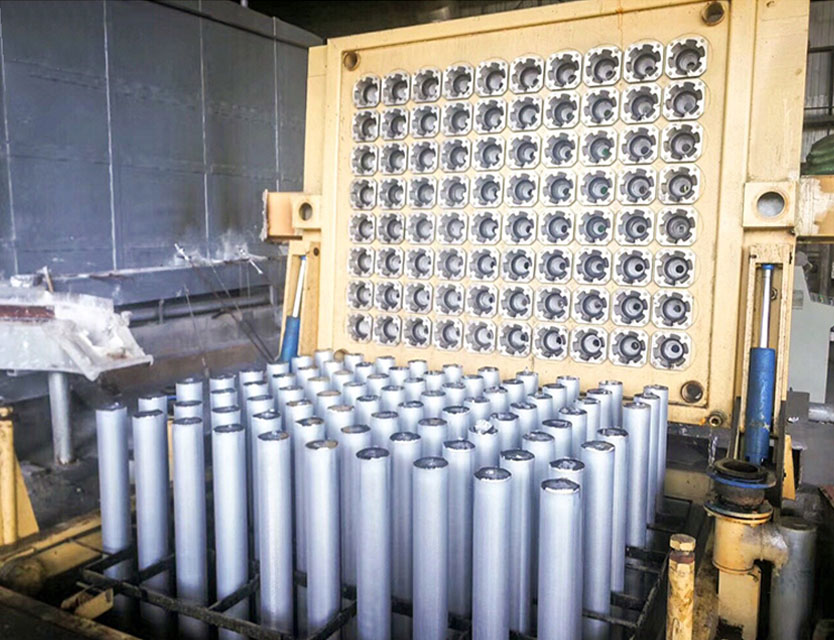
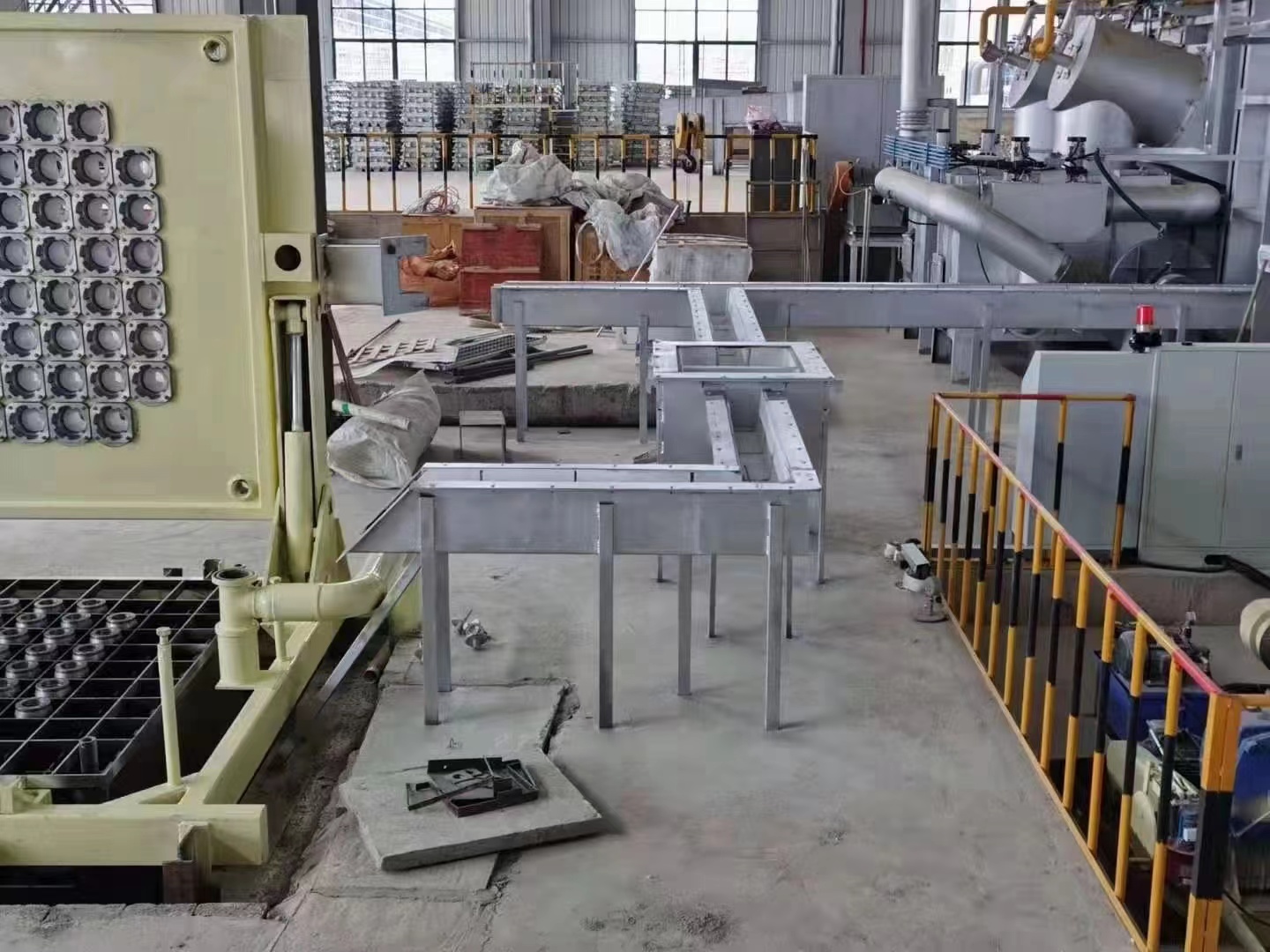
Hot top casting table
The hot top casting table serves as the core support workbench for our hot top billet casting machine unit. It is a masterfully integrated system that combines multiple functional modules to enable multi-flow synchronous casting. While highly effective for steel, this system is also extensively used as a high-performance aluminum billet casting machine for the production of precision small round steel billets and aluminum bars, showcasing its remarkable versatility.
Supply Ability
4 Set/Sets per Month
Packaging & Delivery
Packaging Details : standard package
Port : Foshan/Guangzhou/Shenzhen
Lead Time
| Quantity(sets) | 1 – 1 | >1 |
| Est. Time(days) | 30 | To be negotiated |
Key Integrated Components:
Diversion System
Ensures smooth and even distribution of molten metal.
Heat Preservation Hot Top
Maintains optimal temperature to prevent premature solidification.
Water-Cooled Crystallizer
Ensures fast and even cooling to ensure consistent billet formation.
Hydraulic lifting system
Ensures precise vertical lifting and smooth operation during the casting process.
Ingot Dredging Assistance
Helps in the effective and safe extraction of the cast billets.

Primary Applications
Overview
Our hot top billet casting machine is a new 2020 model designed for manufacturing plants, offering an easy-to-operate solution for producing high-quality round bars. Below are the key specifications that highlight its capabilities as a leading aluminum billet casting machine.
| Place of Origin | Guangdong, China |
| Condition | New, New |
| Machine Type | casting machine, die casting machine |
| Video outgoing-inspection | Provided |
| Machinery Test Report | Provided |
| Marketing Type | New Product 2020 |
| Warranty of core components | 1 Year |
| Core Components | Gearbox, Motor, Gear, Pump |
| Voltage | 380V, 50HZ |
| Warranty | 1 Year |
| Key Selling Points | Easy to Operate |
| Showroom Location | None |
| Applicable Industries | Manufacturing Plant |
| Weight (KG) | 5000 |
| Billet length | 6 meters |
| Billet diameter | 70-406mm |
| billet diameter | 3-16 inch |
| casting method | hot top casting, air slipper casting, oil slipper casting |
| Application | Foundry Industry |
| Usage | Round Bar |
| Type | Horizontal Continuous Casiting Machine |
| Technology | Automatic Mold Adjustment |
Working Principle
The operation of our hot top billet casting machine is a streamlined and efficient process designed to maximize output quality. Here is how this advanced aluminum billet casting machine works:
Molten Metal Entry
Molten steel or aluminum flows into the hot top cavity through a submerged nozzle.
Temperature Control
The hot top maintains constant heating in order to ensure that no crusting occurs on the molten metal surface before time.
First Solidification
The molten metal flows down into the water-cooled copper sleeve, in which the outside part of the billet solidifies immediately after coming in contact with the cold surface.
Removal of Billet
The vibrations in the crystallizer help to avoid adhesion between the billet and the mold, and a straightener pulls the billet out at a constant speed.
Final Cutting
After complete solidification in the secondary cooling zone, the billet is cut to the desired length. Notably, this process requires no continuous casting protective slag, simplifying the entire procedure for our hot top billet casting machine.

| Moded Nio. | Bllet Size Da. x uength (mm) | Bllet qty (pcs) | Power (liw) | Weight per time (k) | Tting Angle(“) | Well She Lx W (mm) |
| ALM-ZB3.5″ | 90*6000 | 54 | B | 5562 | 0-89 | 1900* 1900 |
| ALMZB5″ | 0127*5000 | 32 | B | 5859 | 0-89 | 1800* 1800 |
| AM-Z86″ | 01 52*6000 | 20 | 5876 | 0-89 | 1600*1600 | |
| AM-287″ | 178*6000 | 16 | 6446 | 0-89 | 1600* 1600 | |
| M-288 | 9203*6000 | 12 | B | 6288 | 0-89 | 1600* 1600 |
| ALM-209″ | 9230*6000 | 8 | B | 5382 | 0-89 | 1600* 1600 |
| A M-2B3.5″ | 090*6000 | 100 | 11 | 10300 | 0-89 | 2400* 2400 |
| AUM-2B5″ | *127*6000 | 60 | 11 | 10987 | 0-89 | 2300*2300 |
| ALMZB5.5″ | 0140*6000 | 42 | 11 | 10468 | 0-89 | 2000*2000 |
| ALM-ZB6″ | 152*6000 | 36 | 11 | 10577 | 0-9 | 2000*2000 |
| AM-2B7* | 178*6000 | 26 | 11 | 10476 | 0-89 | 2100*2100 |
| ALM-ZB8″ ; | 203*6000 | 20 | 11 | 10481 | 0-89 | 1800* 1800 |
| AM-ZB9* | 230*6000 | 16 | 11 | 10764 | 0一9 | 1800*1800 |
Remarka Technical parameters above are only for your reference. Finallzed detallis are subject to final contract.

Advantages
Choosing our hot top billet casting machine means investing in superior technology and reliable performance. The following are the core advantages that set our aluminum billet casting machine apart:
Superior Ingot Quality
Ensures uniformity in the solidification onset and the thickness of the ingot shell, effectively reducing the incidence of defects such as cracks and inclusions.
Precision Casting
Specially designed for small cross-section billets (φ50–160mm), effectively solving common issues like steel leakage and rough surfaces found in traditional equipment.
Simplified Process
Eliminates the need for protective slag, which saves on material costs and prevents production failures such as slag line erosion.
Stable Production
Features precise hot top temperature control (within ±10℃) and minimal liquid surface fluctuation, allowing for extended periods of continuous casting.
Lower Wear and Tear
The simple design of the hot top refractory components and water-cooled copper bushings allows for easy repair and ensures a longer service life for your hot top billet casting machine.
Key Points for Using a Hot-Top Billet Casting Machine
To ensure the longevity and optimal performance of your aluminum billet casting machine, proper operation and maintenance are essential. Here are some crucial guidelines for using a hot top billet casting machine.
- Inspect the hot top graphite and refractory condition.
- Check crystallizer water flow and leakage.
- Preheat the hot top and dry refractory parts.
- Verify temperature, vibration, and casting systems.
- Control metal temperature and liquid level.
- Maintain stable casting speed.
- Monitor cooling water conditions.
- Clean the hot top regularly.
- Allow the machine to cool down slowly after casting.
- Avoid rapid cooling of water-cooled components.
- Inspect the hot top lining regularly.
- Check the water-cooled copper sleeve for wear.