An aluminum extrusion process is commonly employed for manufacturing building sections, automobile parts, industrial frames, and enclosures for electronics. Apart from factors like pressure, temperature, and speed of an aluminum extrusion machine, production quality is also influenced by the casting of billets and treating the molten aluminum prior to the aluminum extrusion process. Graphite parts are utilized in some of these processes due to their heat-resistant nature and machinability, as well as lower wettability with molten aluminum.
Insight into the correlation between graphite parts and an aluminum extrusion machine, as well as auxiliary processes, is beneficial for manufacturers.
1. Understanding the Aluminum Extrusion Process
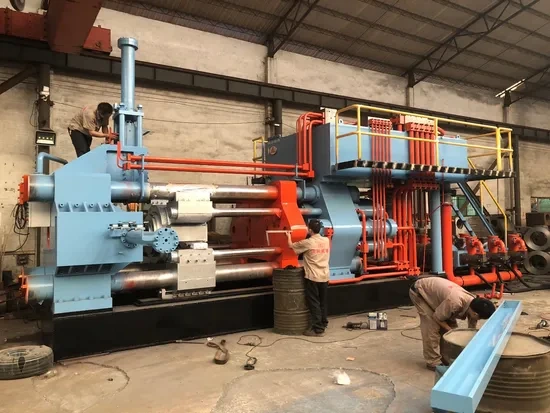
Aluminum extrusion is a metal-forming process in which a heated aluminum billet is forced through a shaped die to produce profiles with specific cross-sectional designs. An aluminum extrusion machine pushes the aluminum ingot out under pressure, and additional equipment is used for heating, cooling, and handling the material.
Key Stages of Aluminum Extrusion
A typical production process involves four main stages:
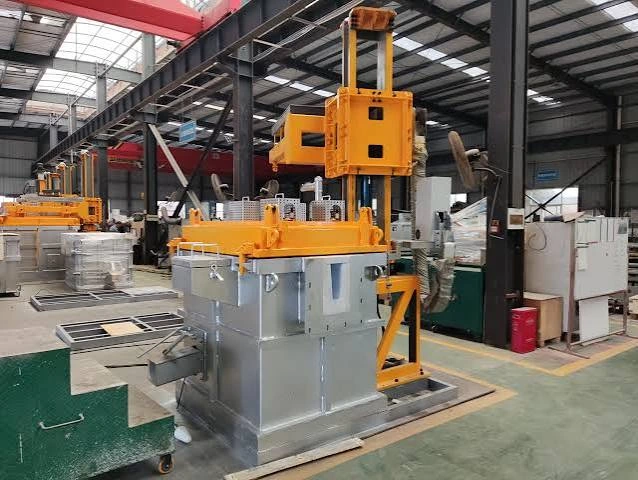
- Billet Preparation: Aluminum billets are heated to the required temperature based on the alloy type and processing specifications.
- Extrusion: The aluminum extrusion machine applies pressure to push the billet through the die.
- Cooling and Handling: The formed aluminum profile is cooled before being moved through the downstream handling equipment.
- Stretching and Cutting: Profiles are straightened, cut to length, and prepared for subsequent finishing operations.
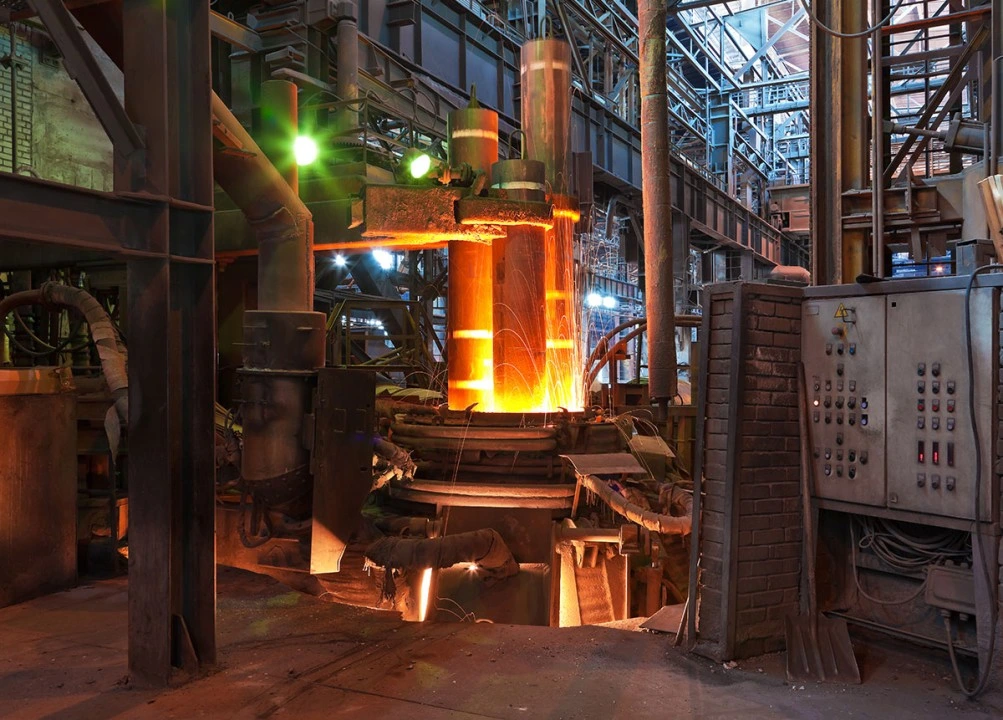
The temperature of billet heating and extrusion varies according to the alloy, billet size, and process. In the upstream melting and casting, the needs are different; the molten aluminum is processed at a higher temperature than its melting point of about 660°C. This stage demands materials that are resistant to high temperatures and have high mechanical strength, as well as resistance to molten metal.
2. Why Are Graphite Components Used in Aluminum Processing?
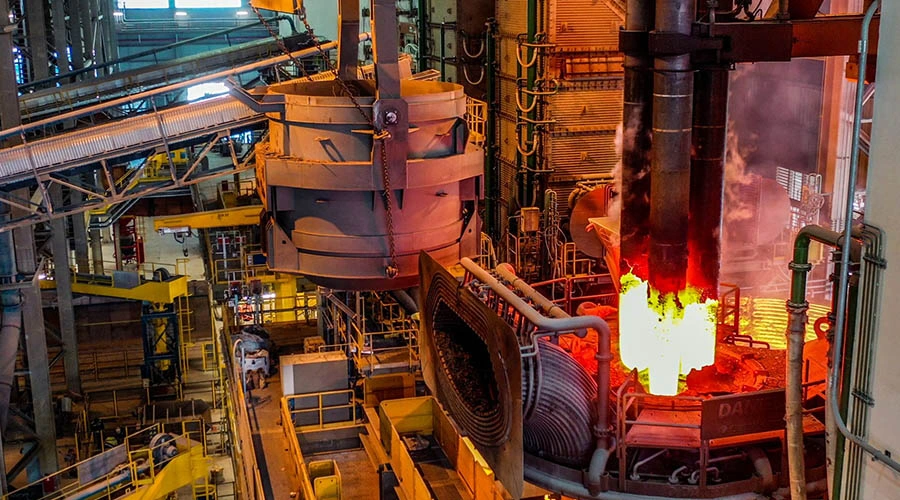
There are a number of attributes of graphite that make it ideal for certain high-temperature uses related to aluminum manufacturing. While not all graphite parts are fitted into the aluminum extrusion machine itself, there are graphite products that help with the processing of billets used in extrusion.
Heat resistance: Graphite can withstand high temperatures under suitable conditions, although oxidation may accelerate when it is exposed to air at elevated temperatures.
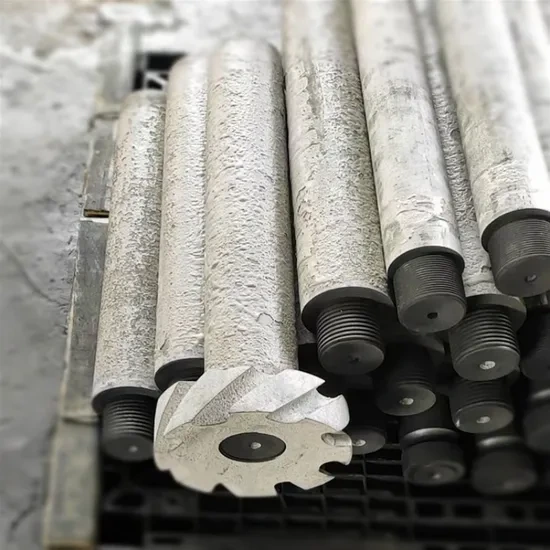
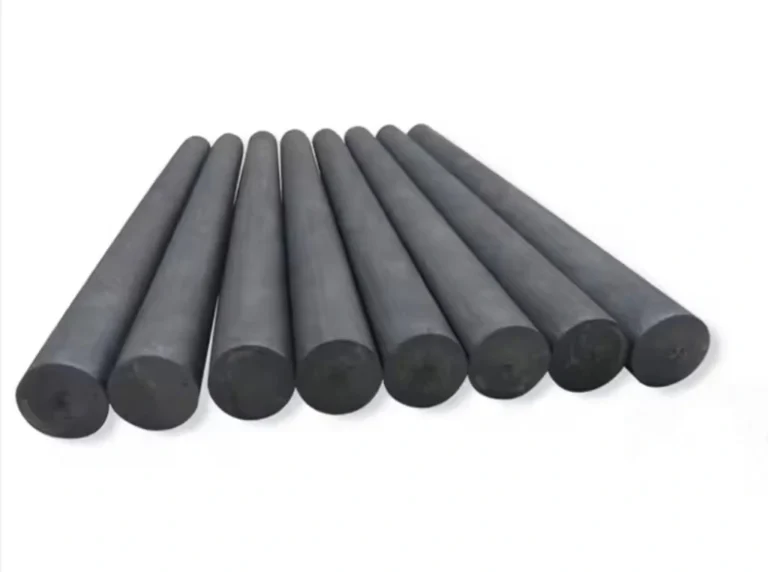
Machinability: It can be manufactured into rings, plates, rods, rotors, and customized shapes with specific dimensions and surface finishes.
Low wettability: Graphite is relatively difficult for molten aluminum to wet under appropriate conditions, making certain grades useful in casting and molten metal handling.
3. Common Graphite Components and Their Applications
| Graphite Component | Typical Application | Main Function |
| Graphite Ring | Aluminum billet casting | Supports specific casting arrangements |
| Graphite Plate | Selected handling systems | Provides guiding or supporting surfaces |
| Graphite Rotor | Molten aluminum treatment | Disperses inert gas for hydrogen removal |
| Graphite Impeller | Molten metal processing | Promotes mixing and gas distribution |
| Graphite Crucible | Aluminum melting | Contains molten metal in compatible applications |
| Graphite Mold | Specialized metal forming and casting processes | Supplies a shaped cavity or working surface for forming operations |
| Graphite Rod | Various industrial systems | Functions as a purpose-made part according to equipment requirements |
| Graphite Heating Element | Compatible industrial furnaces | Generates heat through electrical resistance |
Graphite Plates and Rings
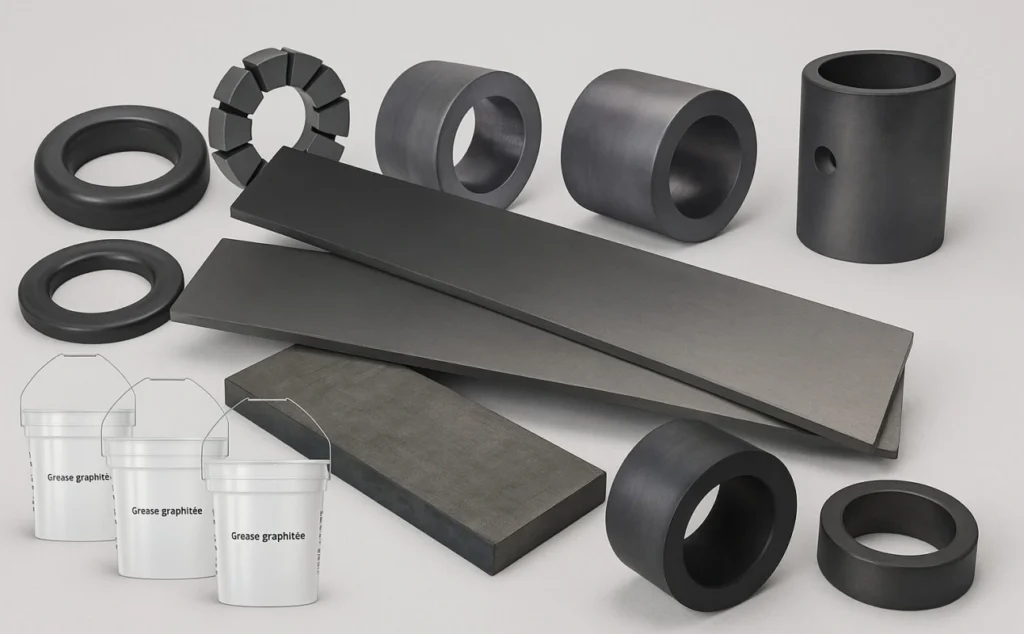
Graphite sheets could be used in particular high-temperature support or handling processes, based on equipment design. Flatness, precision, thermal stability, and wear resistance are some selection factors to consider. The suitability of graphite sheet for use around an aluminum extrusion machine should be assessed according to the equipment design and actual operating conditions.
Graphite rings are usually found in particular aluminum billet casting equipment more than in the extrusion press.
Graphite Rotors and Impellers
Graphite rotors are used in certain systems designed to remove gas from molten aluminum. The rotors help to distribute nitrogen or argon through the melt, such that the bubbles formed can help degas hydrogen from the aluminum, which may cause porosity in the solid aluminum.
The temperature for treating molten aluminum, depending on the alloy used and method of production, falls within a range of 700°C to 760°C. Rotor design, rotational speed, immersion depth, and flow rate of gases affect the efficiency of degassing.
4. How to Choose Graphite Parts for Aluminum Machinery
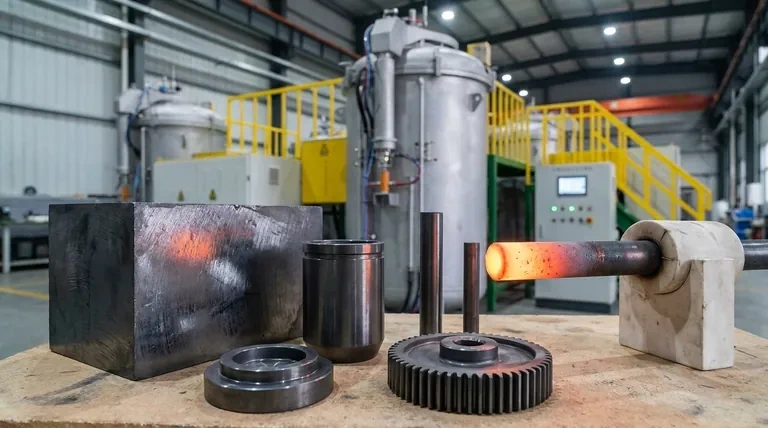
Choosing graphite components for an aluminum extrusion machine and its supporting systems requires careful evaluation of operating conditions and equipment specifications. Material selection should be based on the component’s specific application and working conditions, not temperature resistance alone.
Material Grade and Operating Conditions
Different graphite grades vary in density, bending strength, heat transfer performance, pore structure, and resistance to oxidation. The graphite material in a rotor that is subjected to molten aluminum will need to be different from that of a plate in a handling system.
Graphite grade selection should account for operating temperature, surrounding conditions, applied mechanical stress, and the materials it comes into contact with.
Dimensions and Maintenance
Dimensional aspects should correspond to equipment drawings and installation needs. For instance, rotors and impellers should be carefully checked for concentricity, blade shapes, and rotational balance, while rings and plates should have proper dimensioning.
In the case of an aluminum extrusion machine production line, the regular examination of graphite elements could prevent such problems as cracking, erosion, and dimensional alterations. In addition, the inspection of replacement parts could avoid any modification.
Conclusion
Graphite components serve multiple functions in aluminum production, from casting billets to treating molten metal and supporting other processing operations. Some of the graphite parts include rings, plates, rotors, impellers, among others, which have varying functions, meaning that the suitability of each one will depend on the operating conditions.
If you need graphite parts for an aluminum extrusion production line or customized components such as rings, plates, rotors, and rods, contact us to discuss your specific requirements. We can help in evaluating the suitability of the drawings, dimensions, and operating conditions to suit your needs.