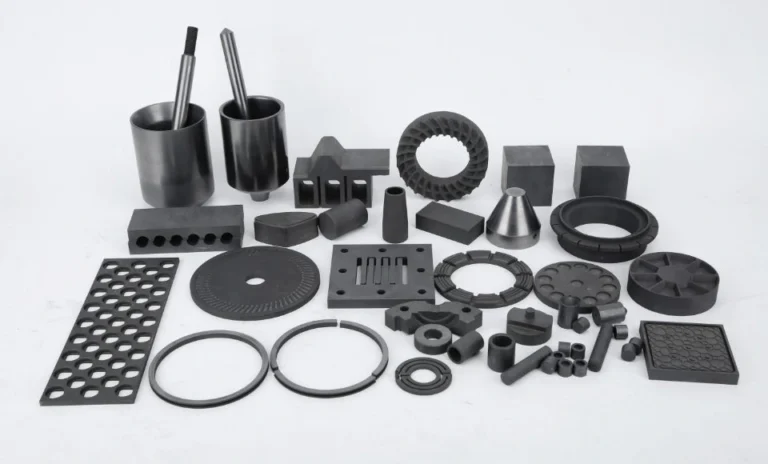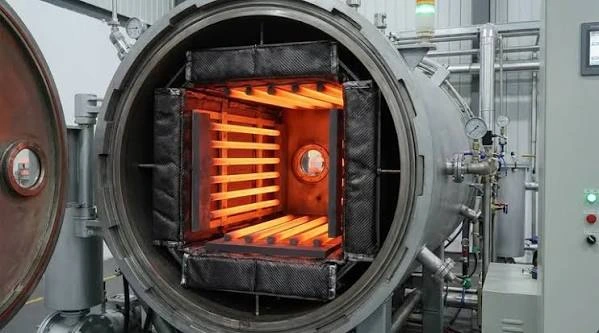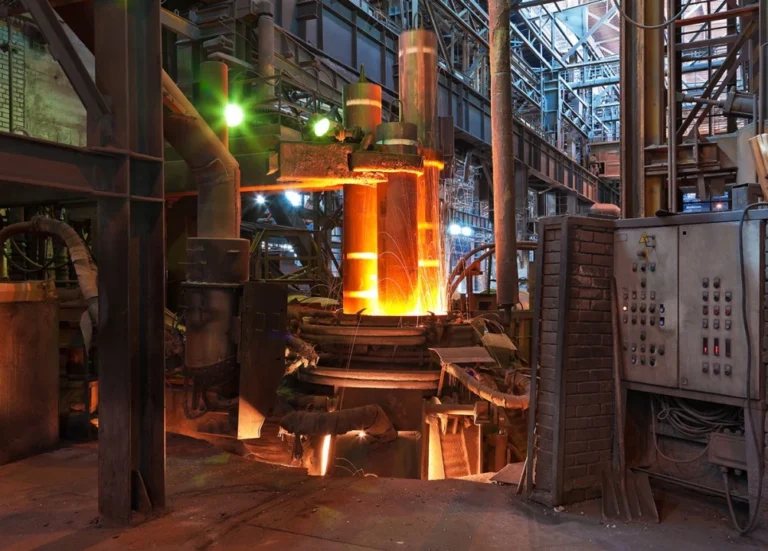
Aluminum alloys find widespread application in aerospace engineering, the automotive industry, and precision electronics. Still, hydrogen gas and solid oxide contaminations become common in aluminum melts during the melting and holding stages. To ensure efficient purification of the melt from hydrogen gas and solid oxide inclusions, rotary degassing is widely practiced in industry. In rotary degassing, the rotor material plays an essential role in degassing efficiency and lifespan. While traditional graphite rotors are known to oxidize, wear mechanically, and degrade in an aggressive molten aluminum environment, the silicon nitride rotor has proved to be superior because of its extraordinary properties.
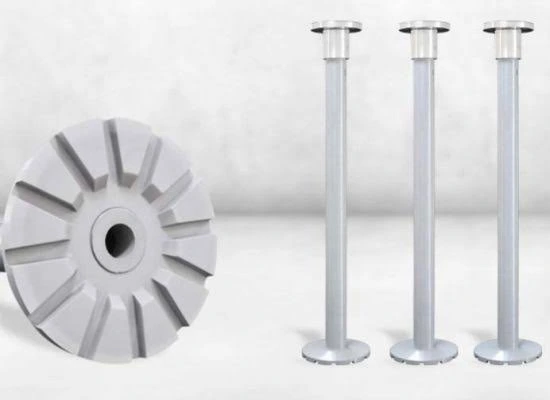
1. Silicon Nitride Rotor is Unmatched in High-Temperature Stability
During common aluminum degassing operations, the operating temperature is always within 700-750 degrees Celsius. Many common metals and ceramics soften, creep, or undergo chemical reactions when exposed to such thermal conditions.
- Covalent Bonding: Silicon nitride molecules are predominantly connected by strong covalent bonds that provide it with very high atomic bond energy.
- Temperature Flexural Strength: At high temperatures up to 800 degrees Celsius, silicon nitride rotor maintains the flexural strength of 600-800 MPa and does not sag or deform.
- Oxidative Passivation: Exposed to ambient atmosphere or molten aluminum at high temperatures, the material develops an ultra-thin protective passivation layer of silica that stops deep oxidation and increases operational lifetime.
1.1 Creep Resistance at High Temperatures
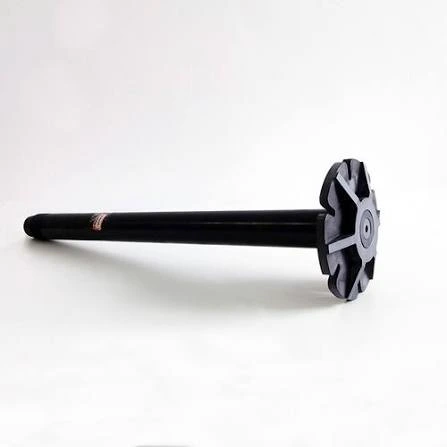
Under the effect of constant high-speed rotation and buoyancy force of molten metal, the rotor must withstand mechanical sagging. The high-quality silicon nitride rotor has a very low creep rate of less than 10^-6 per hour and provides perfect rotational and geometrical symmetry and dynamic balance over thousands of operational hours without bearing misalignment or vibrations.
2. Thermal Shock Resistance of Silicon Nitride Rotor
Degassing operations often include aggressive thermal cycling: direct immersion of a room-temperature impeller in molten aluminum at 750 degrees Celsius, rapid cooling after removing the impeller for maintenance, etc. It causes huge thermal stresses in brittle materials.
- Low Thermal Expansion: Silicon nitride demonstrates exceptionally low thermal expansion of 3.2*10^-6 per Kelvin, thus providing minimal change in dimensions during fast heating and cooling cycles.
- Fracture Toughness: Using advanced gas-pressure sintering or hot-isostatic pressing technologies, the material reaches high fracture toughness and is able to absorb localized thermal shock.
2.1 Application in Foundry Conditions
In foundry operations where frequent tool changing is required, the thermal shock resistance leads to decreased downtime. Foundrymen may safely withstand the temperature shift and avoid the sudden cracking or fracturing inherent to lower-quality ceramics.
3. Wear Resistance of the Silicon Nitride Rotor
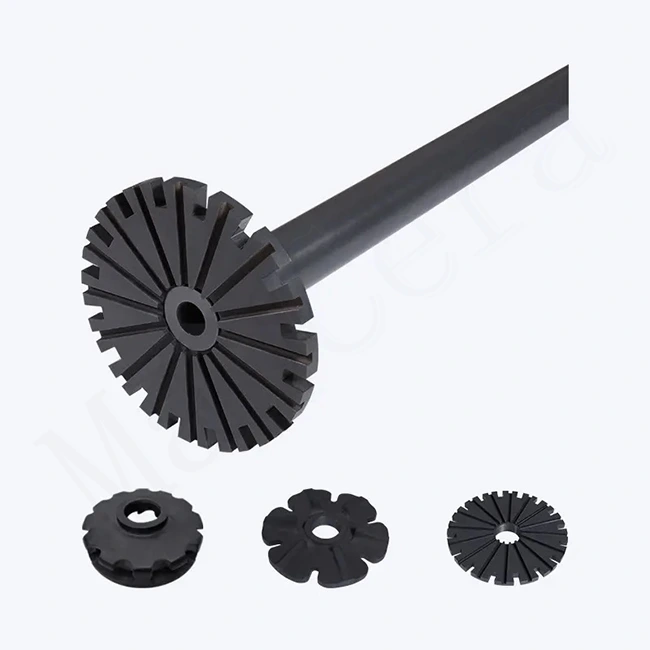
The effective degassing impeller has to shear purging gases like nitrogen or argon into micro-fine bubbles to maximize contact surface with the melt. Simultaneously, hard particles of alumina suspended in the melt impact the rapidly rotating blades with great force and cause serious erosive damage.
Extreme Hardness: Silicon nitride demonstrates extremely high Vickers hardness of 1500-1800 HV.
| Material Type | Vickers Hardness (HV) | Wear Performance at 750°C | Average Service Life (Hours) | Erosion Resistance |
| Graphite Impeller | 80 – 120 | Prone to surface spalling and blade rounding | 150 – 300 | Poor |
| Silicon Nitride Rotor | 1500 – 1800 | Minimal wear, edges remain sharp | 1000 – 3000+ | Excellent |
3.1 Maintaining Micro-Bubble Dispersion
Because of its superior wear resistance, the silicon nitride rotor preserves its aerodynamic blade geometry over extended operational lifespans. This structural integrity guarantees the continuous generation of sub-2mm bubbles, ensuring optimal hydrogen extraction efficiency.
4. Evaluating Corrosion Resistance of a Silicon Nitride Rotor in Molten Aluminum
Molten aluminum is chemically active and corrosive, particularly when refining fluxes containing chlorides and fluorides are introduced to assist slag removal.
Non-Wettability
The contact angle between molten aluminum and silicon nitride is greater than 90°, usually about 120°. It indicates poor wettability of the molten metal.
Chemical Inertness
At standard casting temperatures, silicon nitride neither alloys with liquid aluminum nor reacts with refining salts. Such an inertness excludes the contamination of the pure metal melt with external impurities.
This way, it eliminates dross formation almost completely and makes clean-up after operation very quick and easy.
5. High Mechanical Strength and Structural Stability of a Silicon Nitride Rotor
Other than the nature of the raw material used, the manufacturing process and design are important for industrial application.
- Near-Full Density Sintering: Thanks to advanced densification technology, the modern silicon nitride parts reach over 99 percent of theoretical density and eliminate the presence of micro-pores that can act as stress concentration points.
- Toughness to Shear Stress: Due to high compressive and shear strength, the structure can withstand rather complicated multiaxial stresses arising while rotating at 3000 RPM in viscous molten baths.
5.1 Dynamic Balancing and Precision Engineering
Using a special diamond grinding process, runout tolerance is kept below 0.05 mm. This avoids wobble, lowers mechanical loads on drive shafts, and keeps acoustic noise levels very low in plants.
Conclusion
To sum up, the modern silicon nitride rotor has brought a new level to aluminum purification by removing all typical drawbacks of the graphite one, like short life, severe wear, and contamination of the melt. Unique properties of high-temperature strength, thermal shock resistance, extreme hardness, and chemical inertness make it very economical and efficient for modern foundries.
Any inquiries regarding aluminum degassing optimization and/or production of custom silicon nitride parts can be sent to Haoxinggraphite. Our technical engineering team will be glad to assist you!